
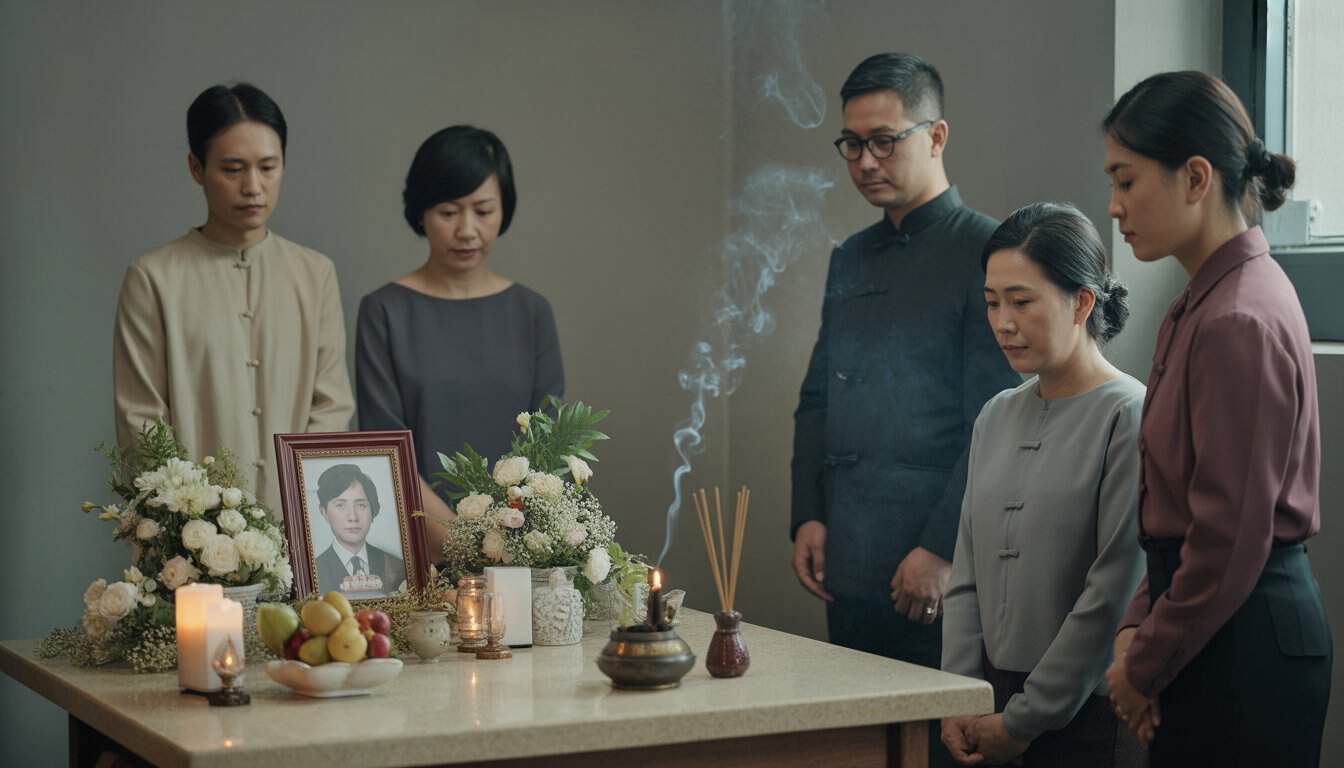
What People Get Wrong About Malaysian Chinese Funeral Customs
Malaysian Chinese funeral customs are varied, family-centred, and often more flexible than outsiders assume.
When you hear 马来西亚华人丧礼习俗, it is easy to picture a strict set of old rules that everyone must follow exactly. In reality, many of the customs are more practical, more flexible, and more family-centred than people assume. You may have heard that every Chinese funeral in Malaysia looks the same, or that the rituals are only about superstition. Both ideas are too simple.
If you are trying to understand these customs for the first time, the key is to separate tradition from myth. Malaysian Chinese funeral practices can vary by dialect group, family background, religion, and even the wishes of the deceased. So instead of treating them as mysterious or fixed, it helps to see them as a way families express respect, farewell, and support during grief. Related source: 马来西亚丧礼流程与礼仪.
Myth 1: All Malaysian Chinese funerals are the same
This is one of the biggest misunderstandings. The phrase 马来西亚华人丧礼习俗 covers a wide range of practices, not a single uniform ceremony. A funeral for a Cantonese family may feel different from one for a Hokkien, Hakka, or Teochew family. The details can also change depending on whether the family follows Buddhist, Taoist, Christian, or free-thinkers’ traditions.
You may see different colours, different chanting styles, different altar arrangements, and different lengths of mourning. Some families hold a wake at home, while others use a funeral parlour. Some include incense, paper offerings, or ritual prayers, while others prefer a simpler modern arrangement. The important point is that there is no one “correct” version that fits every Malaysian Chinese family.
Why the differences matter
These differences usually reflect history and family identity. Many customs were passed down through ancestors and adapted to local Malaysian life. That means what you see in one family may not be what another family does, and both can still be considered respectful and proper.
Myth 2: Funeral rituals are only superstition
It is easy to assume that all rituals in 马来西亚华人丧礼习俗 are based on superstition. In truth, many customs have a social and emotional purpose. Some practices are meant to show respect to the deceased, guide the family through mourning, and help relatives and friends know how to behave in a difficult time.
For example, offering incense, bowing, or holding prayers can be a meaningful way to acknowledge loss. White clothing or muted colours are often used to express grief and humility. Even when a ritual has symbolic meaning, it does not always mean the family is being “superstitious”. For many people, the ritual is simply part of honouring someone’s life and keeping family tradition alive.
Symbolism and practical support
Funeral customs also help create structure during emotional stress. When people are grieving, clear rituals can make the situation less confusing. They tell you when to pay respects, how to interact, and what behaviour is considered considerate. In that sense, ritual is not just belief—it is also a form of emotional organisation.
Myth 3: You must know every rule before paying respects
Many people worry that they will accidentally do the wrong thing at a funeral. While it is wise to be careful, you do not need to be an expert in 马来西亚华人丧礼习俗 before attending. Most families understand that guests may not know every custom, especially if they come from different backgrounds.
What matters most is sincerity. If you are unsure, simply watch what others are doing, follow the lead of the immediate family, and ask politely if you need guidance. In most cases, people will appreciate your effort to be respectful, even if you are not familiar with every tradition.
Simple etiquette you can rely on
Keep your voice low, dress modestly, and avoid joking around. Do not take photos unless the family clearly allows it. When offering condolences, a short and sincere message is enough. You do not need to say something elaborate. Quiet support is usually more meaningful than trying to sound formal.